INTRODUCING war ace and flying author Thomas Alfred Belcher Ditton or Major T.A.B. Ditton as he credited himself on the stories he had published. His pulp career was brief. Ditton only had 17 stories published from 1929 through 1936 in magazines like Sky Birds, Flying Aces, War Aces, Bill Barnes Air Adventures, Thrilling Adventures and Top Notch. Sky Birds did cover Ditton in one of their half a dozen “Flying Into View” features which profiled a different famous birdman or well known character in the world of flying each month. We’ll start with that; then list his pulp bibliography; and follow it up with three of his stories.
Flying Into View
introducing MAJOR T.A.B. DITTON, R.A.F.
“. . . HE WENT DOWN end over 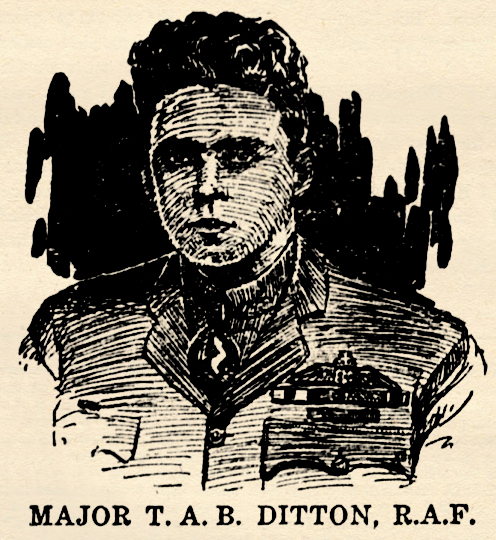 end and crashed behind the German lines, leaving the three other Albatrosses to finish me off, now that I’d used up my last few bullets on him,” continued “Tabs” Ditton, as he ordered more coffee.
“There was nothing that I could do,” he went on, “but do my best to out-stunt ’em and get back to my drome with a whole crate. I sure did stunt that Dolphin, but just a bit too much. With the snarling hun ships swarming all over me I kicked the rudder over and threw her into a vertical bank with the power full on. There was a sudden lurch, a snapping, splintering cra-a-a-a-a-ack, and the two left wings just folded up and over the center section! The bus went into a sickening spin at once, and after a few turns the broken wings came off and went turning and twisting down off to one side. I shed ’em at four thousand feet and I sure covered that in short order.
“All the way down I cut the engine in and out and wrestled with the controls, hoping to get what there was left of the bus out of the spin. I’d unhooked my safety belt so that I would have a chance at least of getting clear when she hit, if I was still interested in getting clear.
“Well, we spun down to about two hundred feet and then the bus came out of the spin for a few seconds. Then when we got down to about a hundred she came out again and slid down on one wing. The men on the ground that saw me said I was thrown clear when she hit, and landed about fifty feet off to one side. I went out for a while and came to in a hospital all snarled up in bandages. I was out in about two weeks and back in the air even if my left eye wasn’t so good,” concluded “Tabs.”
Major T.A.B. Ditton, as he is officially known, was with the R.F.C., which later became the R.A.F., from 1916 until the end of the war. He is officially credited with thirteen German planes, about the same number unofficially, and that besides balloons. He also has several decorations for his skill and bravery in the air.
“Tabs,” as he was known to the men of his outfit, learned to fly on Maurice-Farmans, or “short horns.” He says that they had so many guy wires that the only way they could be tested to see if they were rigged right was to put a canary in the pilot’s seat. If the canary could fly out through the snarl of wires and struts the ship wasn’t rigged right. From those he went on Avros, S.E.5s, Sop. Camels and D.H.5s. He also had flights in bombing crates to make his training complete. Camels were his special hobby, even if they were tricky boats to push around upstairs.
One time one of the “higher ups” decided that the pilots at his drome had not had enough stunting to keep them in trim, so he was ordered up for a few wingovers. Before he went up he had another officer move the planes out of one of the permanent hangars and open the doors on both sides.
After a few rolls and loops he dove his little Sop. Pup down in a screaming dive straight through the hangar and out the other side. He said he landed with his chest all puffed out and was at once put under arrest for reckless flying. The officer who had requested the stunting practice, however, managed to get him off. But needless to say that sort of stunts was barred in the future.
AFTER LUNCH was over “Tabs” and I caught a train for his home in Greenwich Village, where he turns out the stories you men are clamoring for. Here, with his feet parked on a footstool made from the prop of that same Dolphin whose wings he shed, he showed me snapshots of overseas days and told me some of his narrow escapes. This one he says was a joke on himself.
He was setting a Camel down when her wheels caught on a stump. The tail rose up in a high arc and came down with a terrific crun-n-n-n-nch where the plane’s nose should be. “Tabs,” hanging head down from his safety belt, took account of all his bones and found that at least he was all there and not hurt. He was trying to unhook his belt, which was held tightly because of his weight pulling on it, when an “Ack-emma” came running up to see if he was killed, or only banged up. After being assured that “Tabs” was O.K., the Ack-emma reached up under the fuselage and unhooked the safety belt for the suspended pilot. Now for the tragic part of the story! Ditton had forgotten by this time to hold onto the sides of the fuselage, so that when the safety belt snap was released he dropped about two feet and landed on his head. Just his tough luck, after cracking up a ship without getting a mark.
Another almost fatal flight was in a Camel that had been rigged up for instruction work. The main gas tank had been removed and another pilot cockpit and set of controls had been put in where the gas tank had been located. So many young pilots were killed soloing in Camels that it had been thought best to rig up dual controls in a few ships to enable the instructors to ride along with students and help ’em.
Well, this particular bus had just been converted, and Ditton was to give her a buzz or two over the field for a tryout. He told the “Ack-emma” to take the safety belt out of the front seat so that it would not get in the way of the stick.
“Tabs” took the bus up a good ways and proceeded to do his stuff with her. A few minutes later he decided to loop her. The loop went O.K. till he tried to level off at the end of the loop. Try as he might he couldn’t get the stick back to neutral to save his neck, so up went the nose into another loop. He cut the motor and of course she stalled. He did his best but the stick refused to go forward an inch. Right and left O.K. But front? Not an inch!
He finally decided to stall and spin and side slip all the way down to the field. When he landed there was quite an audience waiting for an explanation, including several C.O.s. The first thing Ditton did was to look into the front pit, and there, sure enough, was the safety belt looped over the stick. When the plane had gone into the first loop the belt had hung, down, of course, and swung over the end of the stick. When the stick was shoved forward at the end of the loop of course it tightened the belt about the stick in the front pit, and there it was locked for good. That Ack-emma is still running!
Major Ditton is a yery popular author here at the Sky Birds drome. You can read more of his split second air thrills at any time—because he draws all of his yarns from actual personal experience.
Bibliography
| title |
magazine |
date |
vol |
no |
 |
| 1929 |
| The Desert Hawk |
Sky Birds |
Sep/Oct |
3 |
1 |
| Aerobatics |
Aviation Stories |
Oct |
1 |
3 |
|
| 1930 |
| Death Deviation |
Flying Aces |
Jan |
4 |
4 |
| The Flying Idol |
Sky Birds |
Jan |
3 |
4 |
| Eagle of the North |
Flying Aces |
Feb |
5 |
1 |
| Three Points Ahead |
Flying Aces |
Mar |
5 |
2 |
| Air Wolves |
Flying Aces |
Apr |
5 |
3 |
| Death Rides High |
Flying Aces |
May |
5 |
4 |
| Desert Vultures |
Sky Birds |
May |
4 |
4 |
| Boom Buzzards |
Flying Aces |
Aug |
6 |
3 |
|
| 1932 |
| Stars in the Sky |
War Aces |
Apr |
9 |
25 |
| Artillery Guys |
Battle Stories |
Jul |
10 |
57 |
|
| 1935 |
| Annihilation or a Firing Squad |
Dime Adventure |
Jun |
1 |
1 |
| Diamonds in the Sky |
Bill Barnes |
Sep |
4 |
2 |
| Sable Rider |
Thrilling Adventures |
Nov |
15 |
3 |
| Black Saber |
Thrilling Adventures |
Dec |
16 |
1 |
|
| 1936 |
| Wings of the Dragon |
Top-Notch |
Jan |
98 |
1 |
Here are a trio of his stories that ran in the 1930 in the pages of Flying Aces and Sky Birds.
Death Derivation
Murder in the skies. The slain pilot lay slumped in his cockpit—the blue mark of a pistol shot on his forehead. A mysterious killing in the air that will keep you guessing.
The Flying Idol
Yank flying courage clashes with the treacherous cunning of a swarm of godless yellow devils. A tale of thrills and daring adventure in heathen skies!
Death Rides High
Powell was fighting mad. It wasn’t the crashed altimeter that got him—it was the startling discovery he made after that.





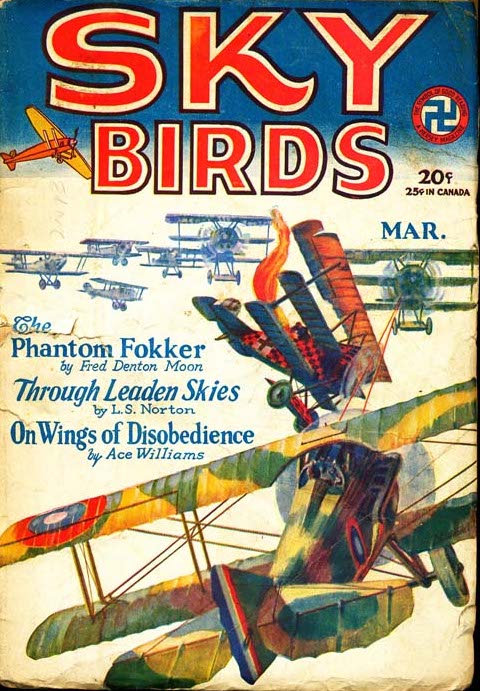 another gripping tale from the prolific pen of Arch Whitehouse! Whitehouse had numerous series characters in the various air pulps—Coffin Kirk, Buzz Benson, and The Casket Crew to name a few. But this week’s story does not feature any of his series characters. It’s about Teddy.
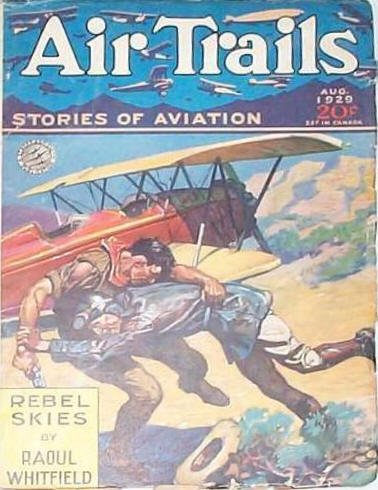 exciting air adventure with Rusty Wade from the pen of Frank Richardson Pierce. Pierce is probably best remembered for his prolific career in the Western Pulps. Writing under his own name as well as two pen names—Erle Stanly Pierce and Seth Ranger. Pierce’s career spanned fifty years and produced over 1,500 short stories, with over a thousand of these appearing in the pages of Argosy and the Saturday Evening Post.
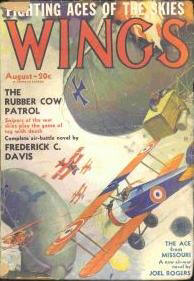
 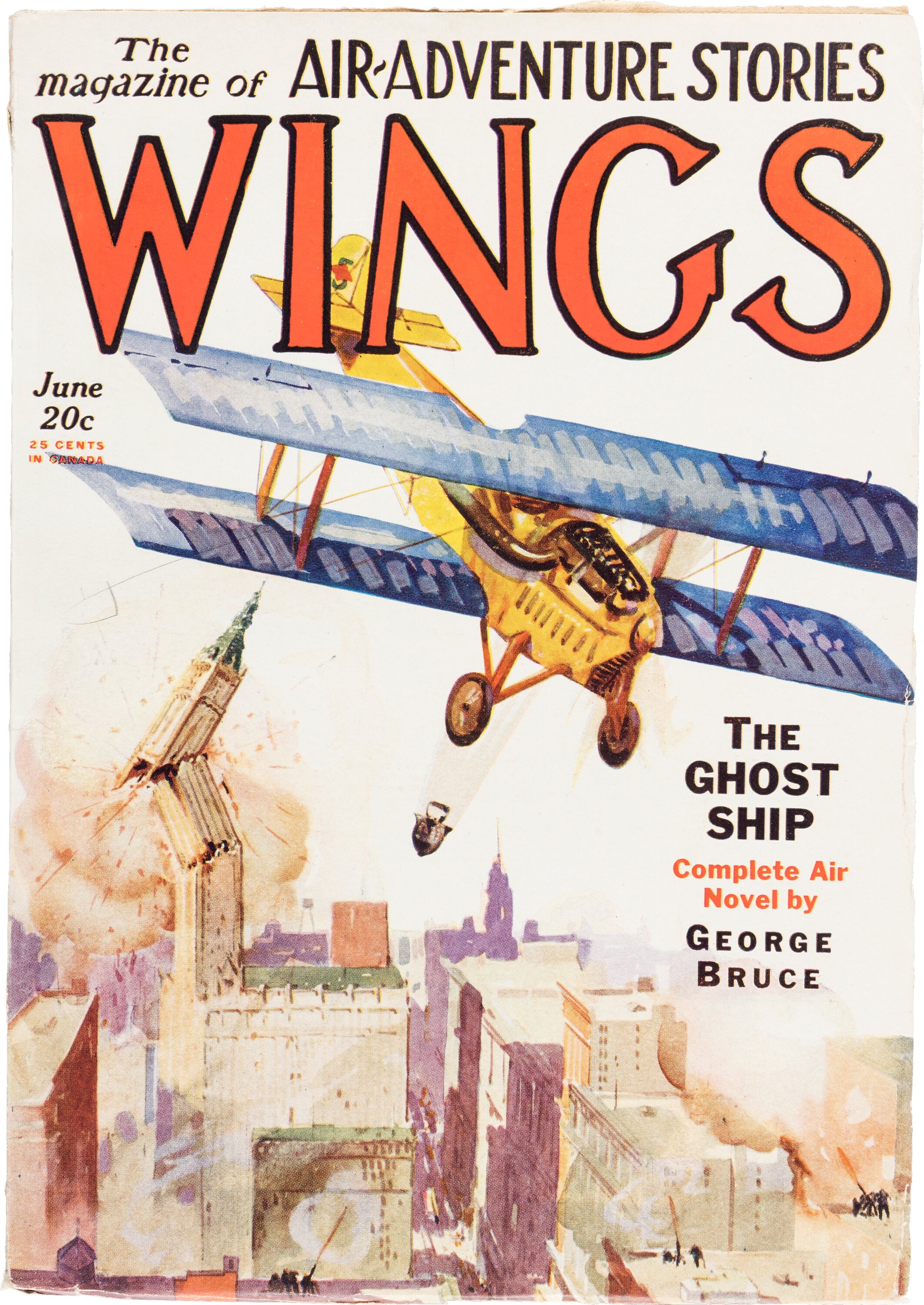 a short story by renowned pulp author Frederick C. Davis. Davis is probably best remembered for his work on Operator 5 where he penned the first 20 stories, as well as the Moon Man series for Ten Detective Aces and several other continuing series for various Popular Publications. He also wrote a number of aviation stories that appeared in Aces, Wings and Air Stories.
 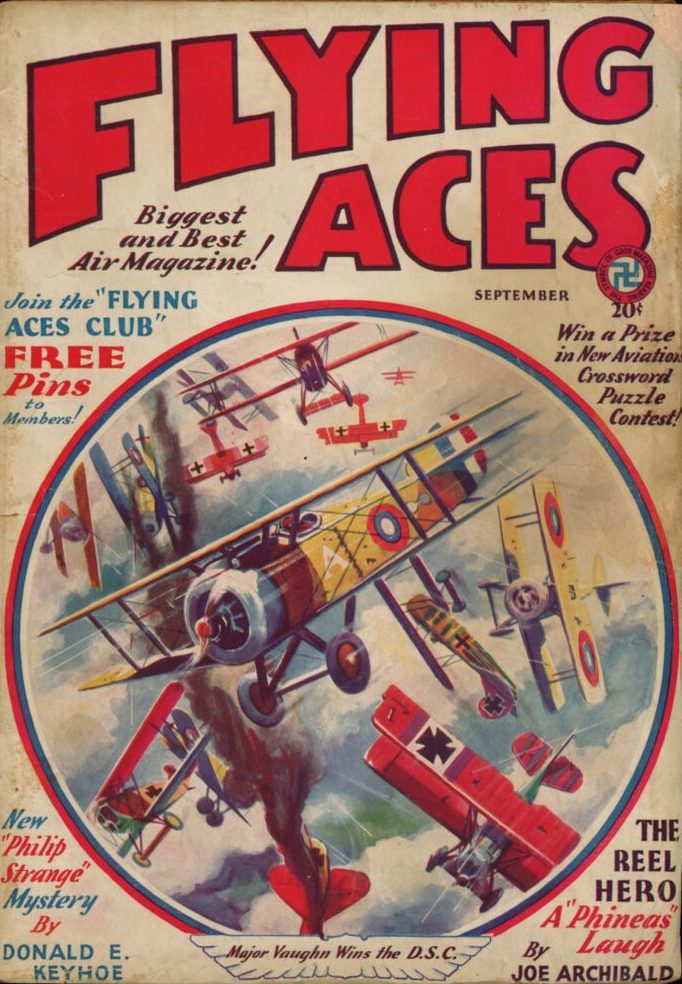 That sound can only mean one thing—that Bachelor of Artifice, Knight of Calamity and an alumnus of Doctor Merlin’s Camelot College for Conjurors is back to vex not only the Germans, but the Americans—the Ninth Pursuit Squadron in particular—as well. Yes it’s the marvel from Boonetown, Iowa himself—Lieutenant Phineas Pinkham!
 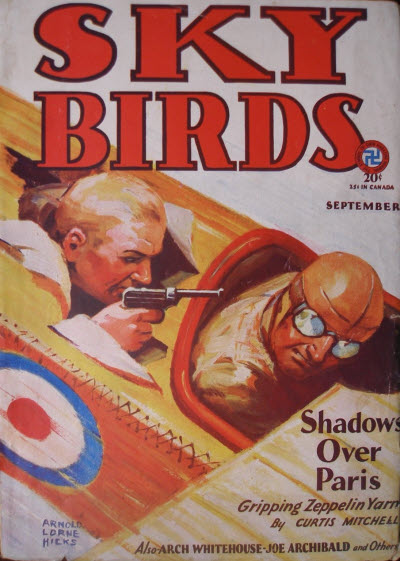 an early story from the pen of Donald E. Keyhoe from the pages of the September 1930 Sky Birds magazine. Keyhoe started appearing regularly in the aviation pulps—Wings, Air Stories, Sky Birds, Flying Aces—starting in December 1929. His series characters started in August 1931.
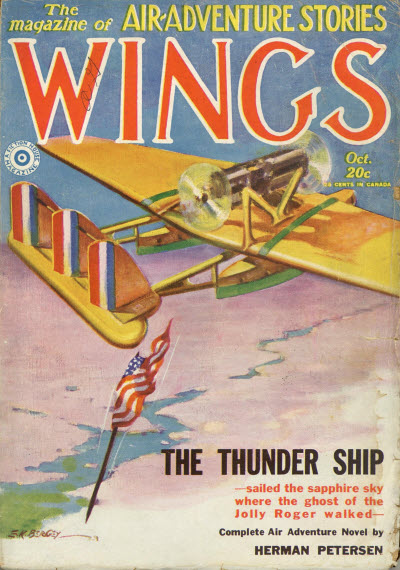
 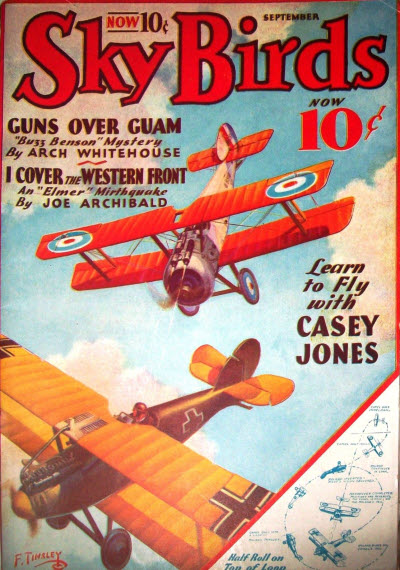 Franklin H. Martin. Not much is known about Martin aside from the fact he worked as a reporter on Newark newspapers. He had almost a hundred stories published in the pulps with roughly three quarters being detective or weird menace stories and the remaining quarter being air stories in the pages of Sky Birds, War Birds and Wings.
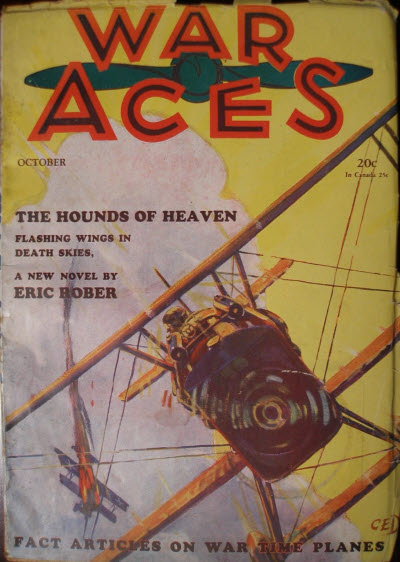 pen of the Navy’s own Allan R. Bosworth. Bosworth wrote a couple dozen stories with Humpy & Tex over the course of ten years from 1930 through 1939, mostly in the pages of War Aces and War Birds. The stories are centered around the naval air base at Ile Tudy, France. “Humpy” Campbell, a short thickset boatswain’s mate, first class who was prone to be spitting great sopping globs of tabacco juice, was a veteran seaplane pilot who would soon rate two hashmarks—his observer, Tex Malone, boatswain’s mate, second class, was a D.O.W. man fresh from the Texas Panhandle. Everybody marveled at the fact that the latter had made one of the navy’s most difficult ratings almost overnight—but the answer lay in his ability with the omnipresent rope he constantly carried.
 Franklin H. Martin. Not much is known about Martin aside from the fact he worked as a reporter on Newark newspapers. He had almost a hundred stories published in the pulps with roughly three quarters being detective or weird menace stories and the remaining quarter being air stories in the pages of Sky Birds, War Birds and Wings. In fact, his very first published pulp story was a brief aviation tale in Wings. It was the “Hanger Yarn” for the month. The Hanger Yarn was a round-table of airmen, where airmen would gather after hours to smoke and tell yarns and make you feel like you’re right at home in the hanger with them!
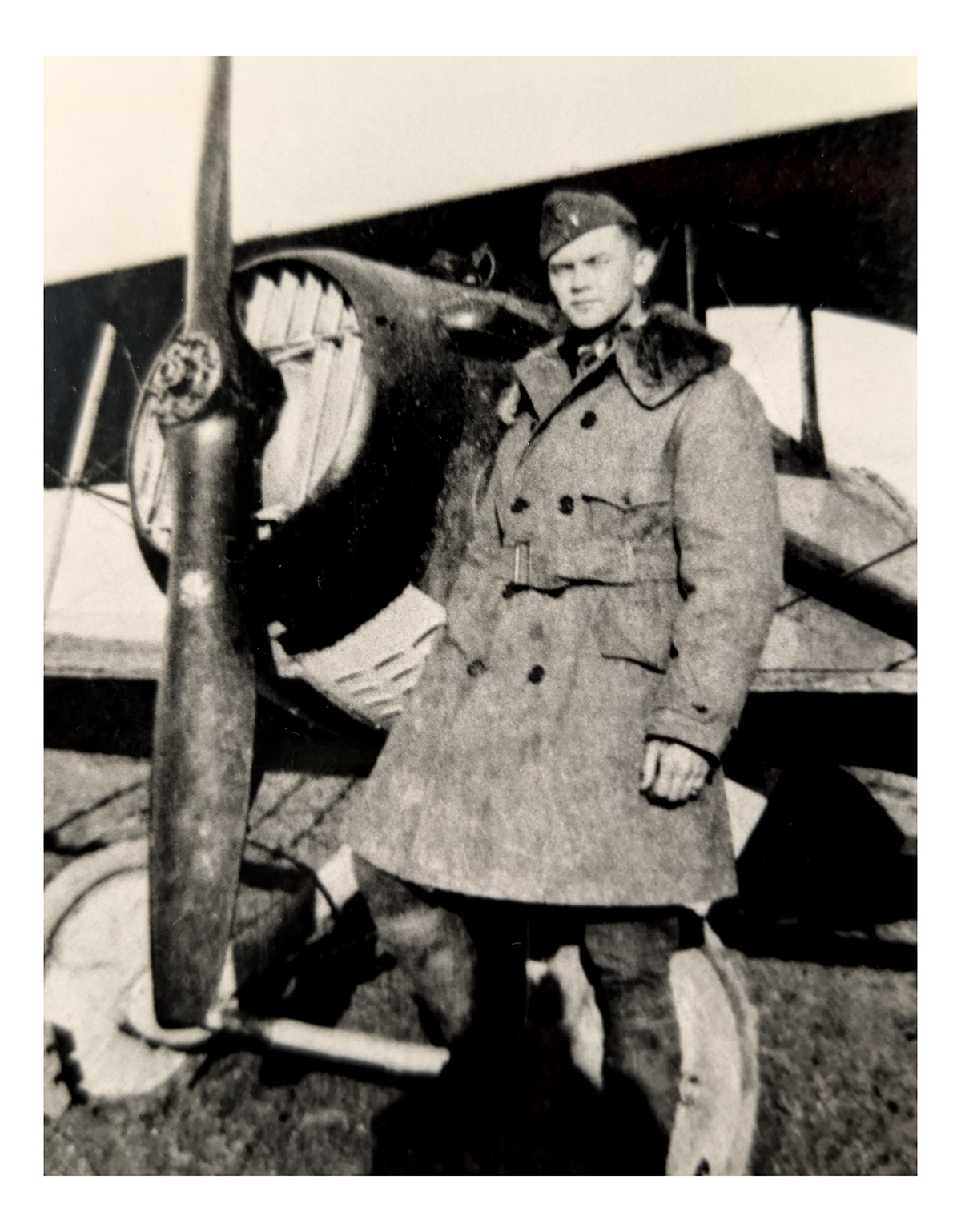
 by the prolific O.B. Myers! Myers was a pilot himself, flying with the 147th Aero Squadron and carrying two credited victories and awarded the
  of every aviator when he wants to do something that is just a little beyond the assigned mission. Patrolling in itself should provide enough excitement for any one person. The flyer never knows when he will be called upon to give account of himself, whether on an equal footing with his enemy, or whether to engage in combat with formations many times his equal. Considering all the hazards of war time flying, irrespective of the mission, it would seem that the aviator would be satisfied with the common dangers of his profession without seeking the new.
 O.B. Myer’s didn’t really have any series characters. The few recurring characters he did have in the pages of Dare-Devil Aces, we’ve collected into a book we like to call
 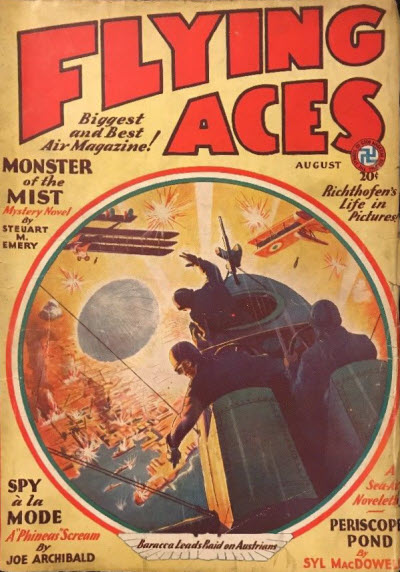 That sound can only mean one thing—that Bachelor of Artifice, Knight of Calamity and an alumnus of Doctor Merlin’s Camelot College for Conjurors is back to vex not only the Germans, but the Americans—the Ninth Pursuit Squadron in particular—as well. Yes it’s the marvel from Boonetown, Iowa himself—Lieutenant Phineas Pinkham!
 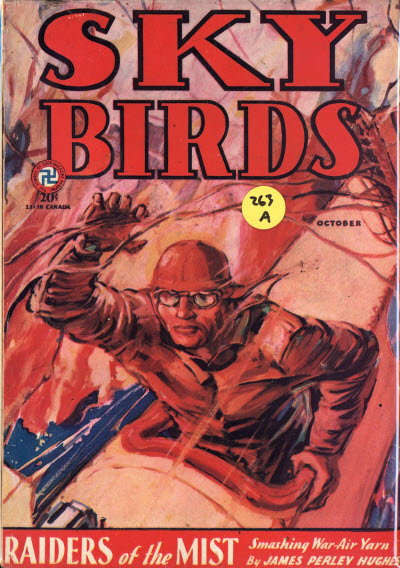 the inimitable
 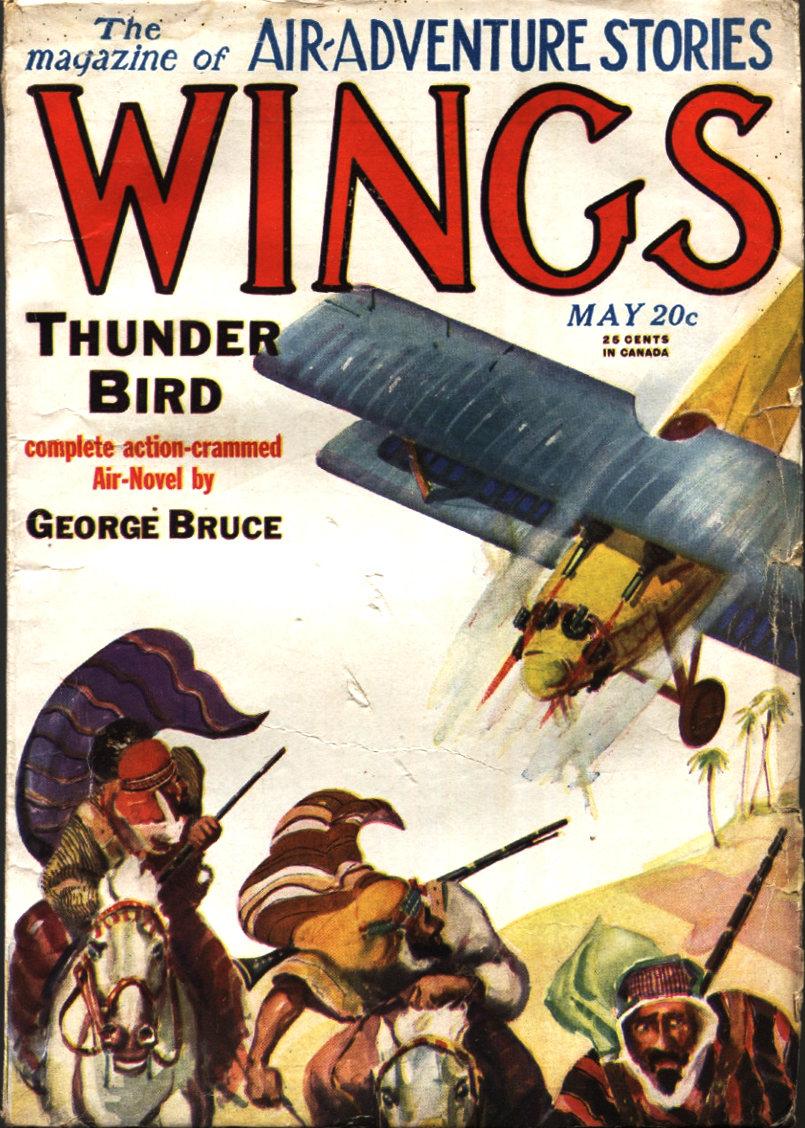 a short story by renowned pulp author Frederick C. Davis. Davis is probably best remembered for his work on Operator 5 where he penned the first 20 stories, as well as the Moon Man series for Ten Detective Aces and several other continuing series for various Popular Publications. He also wrote a number of aviation stories that appeared in Aces, Wings and Air Stories.
 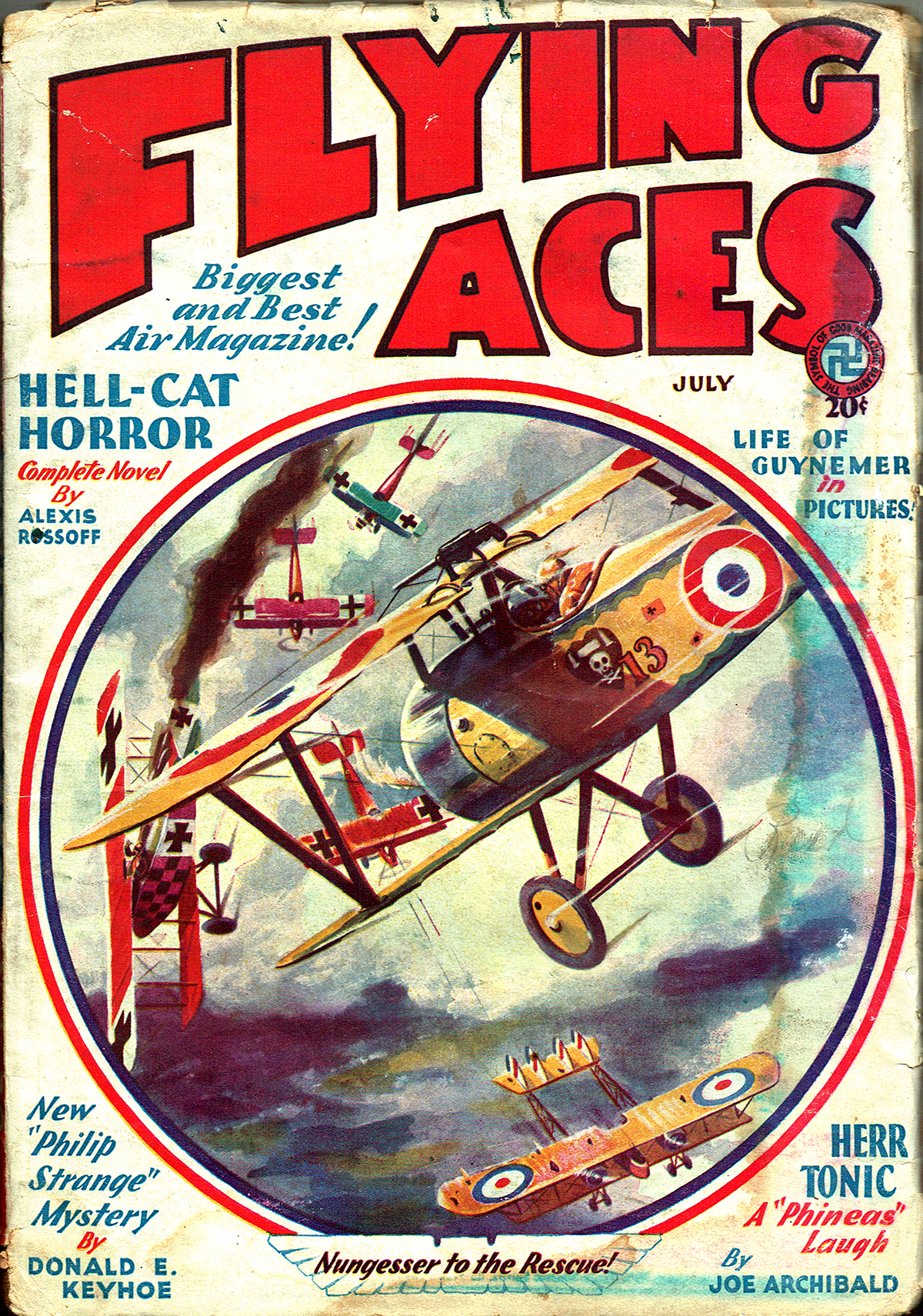 That sound can only mean one thing—that Bachelor of Artifice, Knight of Calamity and an alumnus of Doctor Merlin’s Camelot College for Conjurors is back to vex not only the Germans, but the Americans—the Ninth Pursuit Squadron in particular—as well. Yes it’s the marvel from Boonetown, Iowa himself—Lieutenant Phineas Pinkham!
 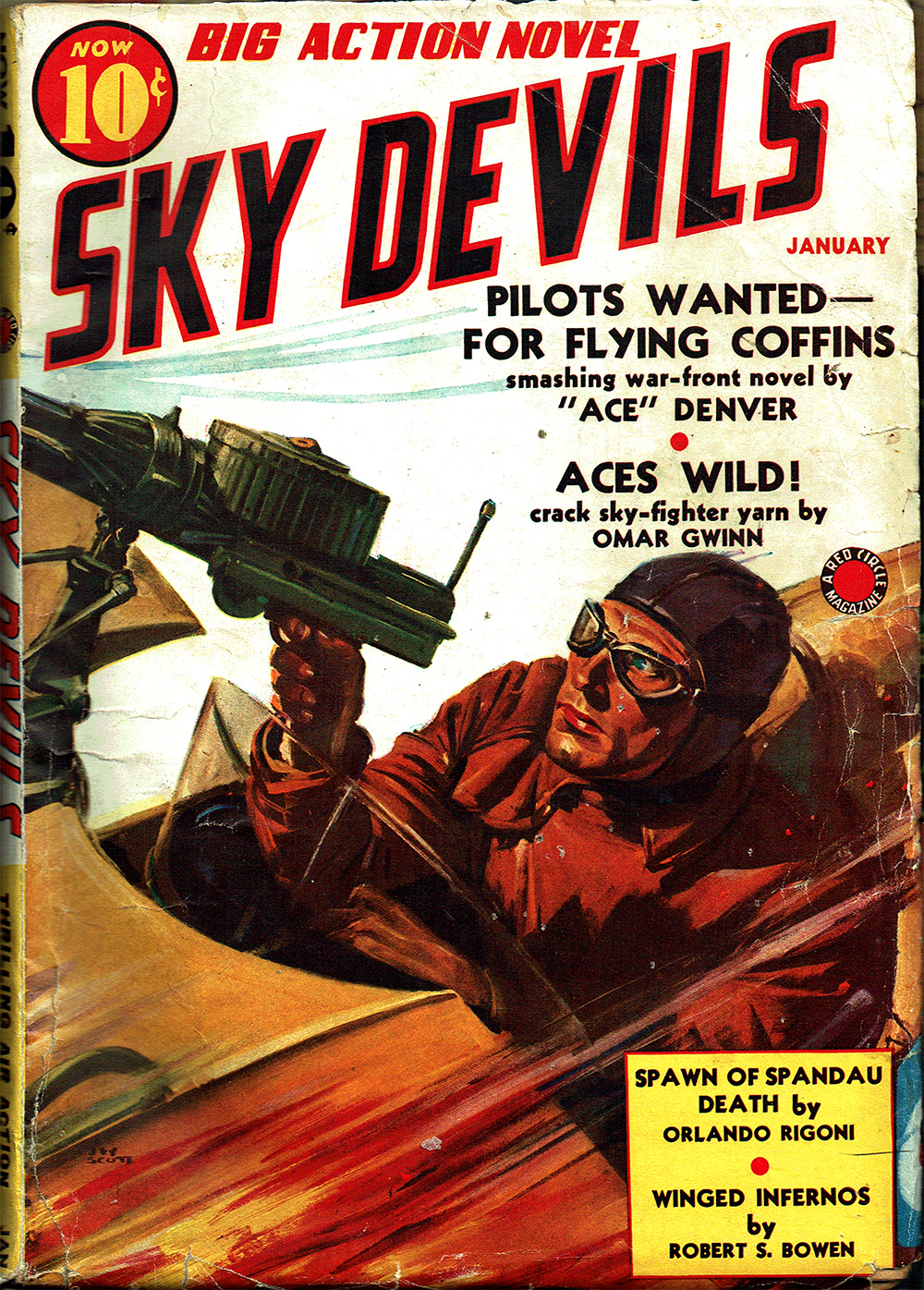 a story from the short-lived Sky Devils magazine by Anthony Field. Anthony Field was a pseudonym used by Anatole Feldman who specialized in gangland fiction—appearing primarily in Harold Hersey’s gang pulps, Gangster Stories, Racketeer Stories, and Gangland Stories. His best-known creation is Chicago gangster Big Nose Serrano. But he also wrote a number of aviation stories including four stories for Sky Devils featuring Quinn’s Black Sheep Squadron—this is the third of those four stories!